
Global Stories · Japan
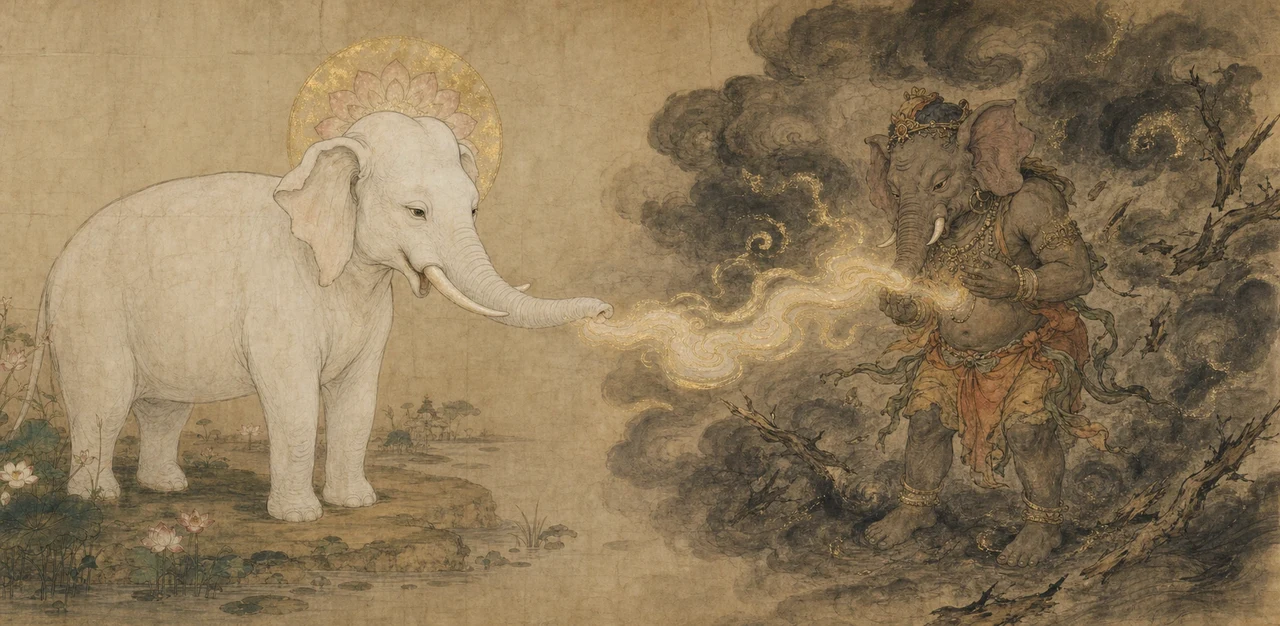
Japanese Buddhist tradition preserves its own distinctive origin story for Kangiten, one involving the Bodhisattva Kannon, known in Sanskrit tradition as Avalokiteshvara, and a wild, obstacle-creating elephant spirit named Vinayaka.
An Untamed Force
As this Japanese Buddhist account is told, Vinayaka, before his gentler form was known, represented a disruptive, obstacle-making force too wild and destructive to be reasoned with directly, in need of a compassionate but skillful intervention.
Compassion as the Path to Peace
Kannon is remembered taking the form of a female elephant to approach and calm this wild spirit, and through this meeting, Vinayaka's destructive energy was transformed into the protective, benevolent form later worshipped as Kangiten: obstacle-maker turned obstacle-remover.
What This Story Reveals
This distinctly Japanese retelling shows how thoroughly his core identity as remover of obstacles was preserved even as the surrounding story changed entirely to fit a new religious context, arriving at the same essential truth by an entirely different path.