
Global Stories · Russia
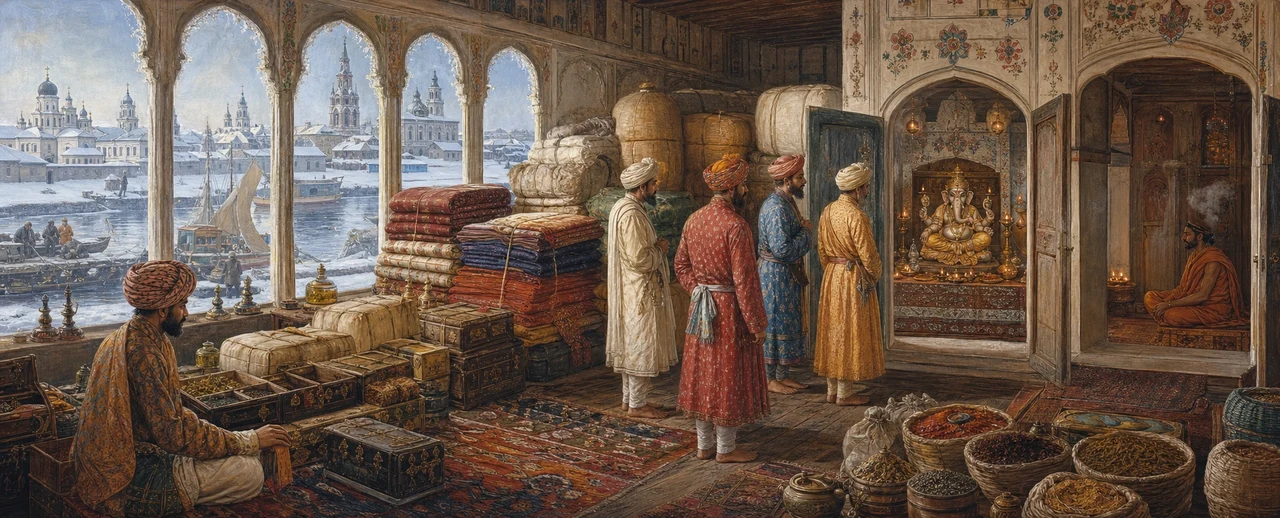
Along Russia's Volga River, the city of Astrakhan hosted a small but enduring Indian trading colony from the seventeenth through the nineteenth centuries, a community that maintained its own dedicated space for worship within the city's bustling merchant quarter.
A Community Welcomed on the Volga
Numbering no more than a few hundred at any time, Astrakhan's Indian merchants, largely Marwaris, Sindhis, and Punjabis, were welcomed by Russian authorities and established a lasting trading post, with Russian archives recording as many as twelve resident sadhus in the community by 1746.
A Temple Within the Trading House
Within the Indian Gostiny Dvor, the community's dedicated trading complex, several rooms were set aside specifically as a temple, giving the merchants a formal, lasting space to continue their devotional practices far from home while conducting business between Mughal India and Tsarist Russia.
What This Community Reveals
Astrakhan's small but well-documented Indian community shows how thoroughly devotional life traveled alongside trade, merchants securing not just warehouses and living quarters in a distant land, but the sacred space needed to keep their full religious practice, including devotion to Shree Ganesh, genuinely alive.