
Global Stories · Egypt
At Berenike, an ancient Roman port on Egypt's Red Sea coast, archaeological excavation has uncovered clear evidence of an Indian merchant community that lived and worshipped there nearly two thousand years ago.
A Crossroads of Empires
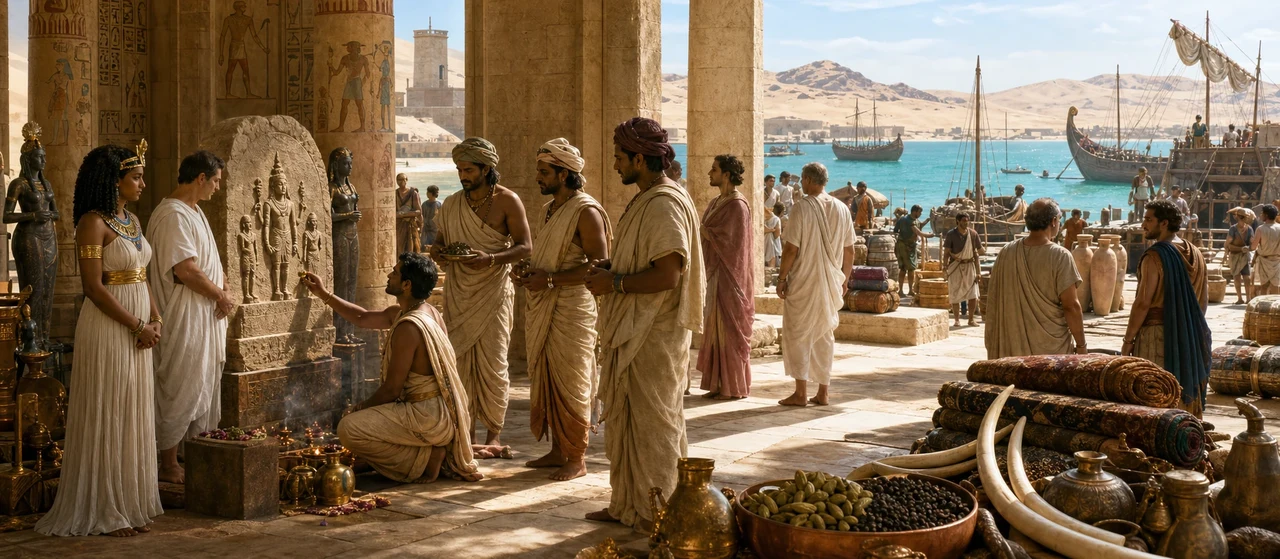
Berenike served as one of the Roman Empire's key gateways to the Indian Ocean trade, connecting Mediterranean markets to India via monsoon-driven sea routes, and archaeologists have found statuettes of Buddha, a stele bearing Hindu deities, and Sanskrit inscriptions among the site's religious artifacts.
Faith Woven Into a Shared Sanctuary
Rather than building separate temples, the Indian merchants and travelers who lived at Berenike appear to have integrated their own religious offerings into the site's existing sanctuary, dedicated principally to Isis, reflecting the cosmopolitan, multi-faith character of this bustling trade hub.
What This Discovery Reveals
The presence of Hindu religious imagery at Berenike offers tangible evidence that Indian traders carried their devotional practices with them across the Indian Ocean and into Roman Egypt itself, evidence of a religious reach far wider than is often recognized.