
Global Stories · Japan
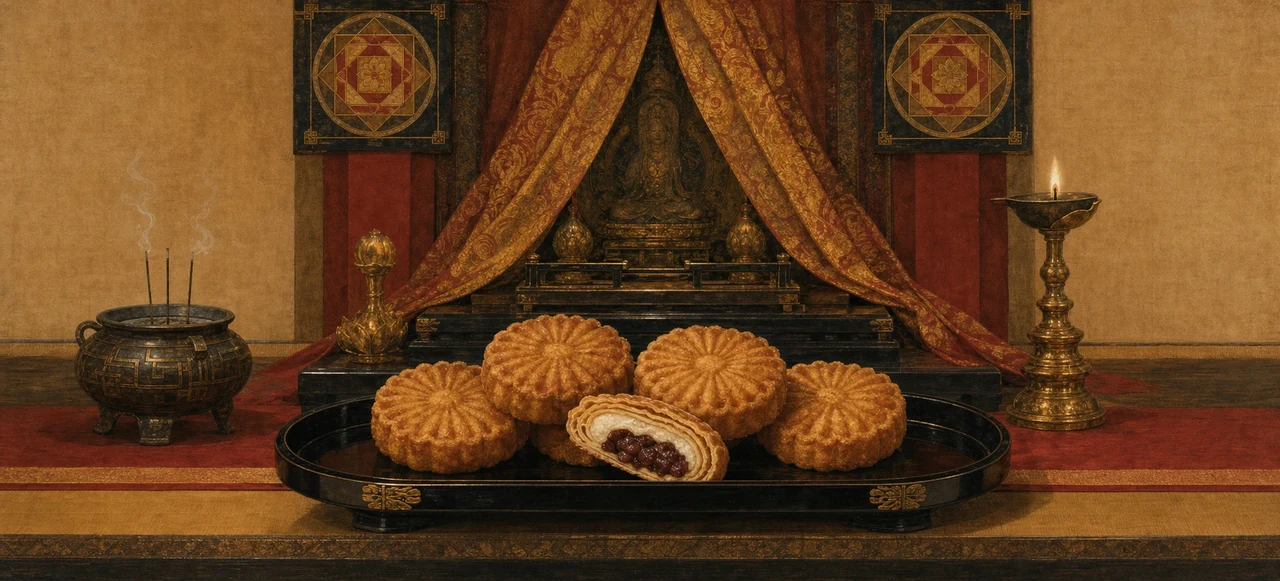
Just as modak remains Shree Ganesh's most beloved offering in India, Kangiten in Japan has his own parallel sweet: Kangidan, a fried confection whose story stretches back over a thousand years.
A Sweet That Traveled Far
Kangidan arrived in Japan during the Nara period, roughly the eighth century, carrying the same essential idea as the Indian modak, a filled, fried sweet offered specifically to the elephant-headed deity, but adapted with local ingredients: a dough of parched flour wrapped around curds, honey, and red bean paste.
A Living Tradition
Kangidan remains associated with Kangiten worship in Japan to this day, prepared according to recipes maintained for centuries, its continued presence a small but tangible sign of how far Shree Ganesh's favorite kind of offering managed to travel and endure.
What This Offering Reveals
Whether called modak in India or Kangidan in Japan, the underlying devotion behind this sweet has remained remarkably consistent: the same instinct to offer something crafted with care to the deity who removes obstacles and grants prosperity.