
Global Stories · Mongolia
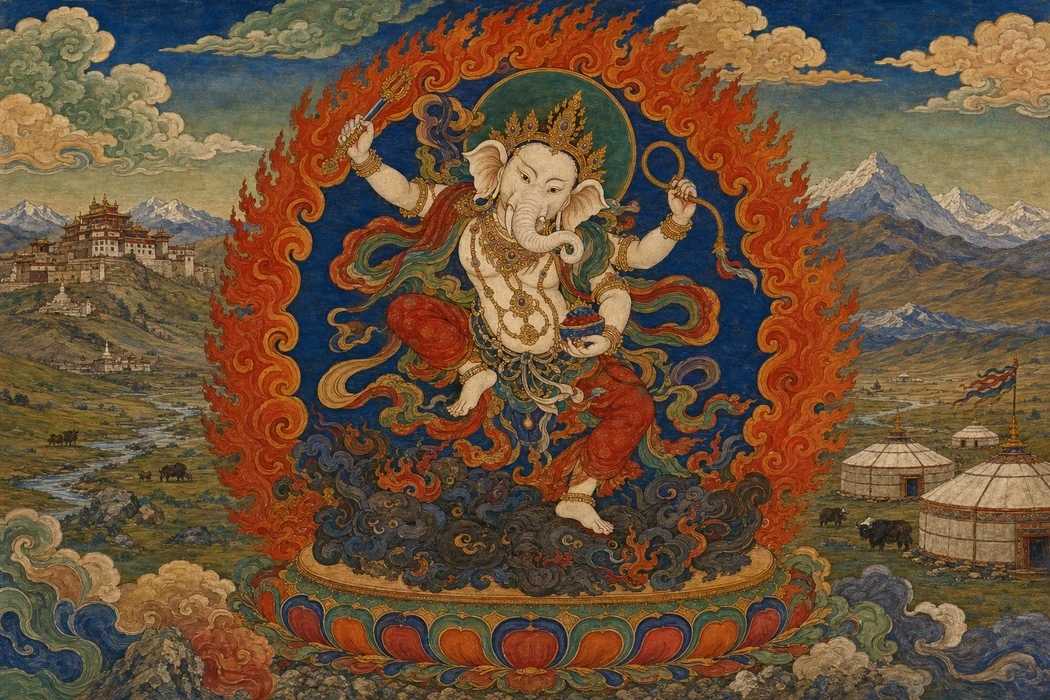
As Vajrayana Buddhism spread from Tibet into Mongolia, Shree Ganesh's worship traveled with it, taking root within the monasteries of the Mongolian steppe as a fierce, dancing protector invoked against negative and harmful forces.
A Long Journey Northward
Mongolia's adoption of Tibetan Buddhist practice, particularly from the sixteenth century onward, brought with it the full range of Vajrayana's protective deities, including the dancing, guardian forms of Shree Ganesh already established within Tibetan monastic tradition.
A Protector for a Nomadic World
Within Mongolia's own nomadic monastic culture, this dancing protector form found particular resonance, his role as guardian against obstacles and negative forces suited to communities whose lives depended on navigating an often unpredictable and demanding landscape.
What This Tradition Reveals
His presence within Mongolian monasteries marks one of the furthest reaches of his worship across Asia, carried not directly from India but through the Tibetan Buddhist tradition that had already made him fully its own.