
Global Stories · Afghanistan
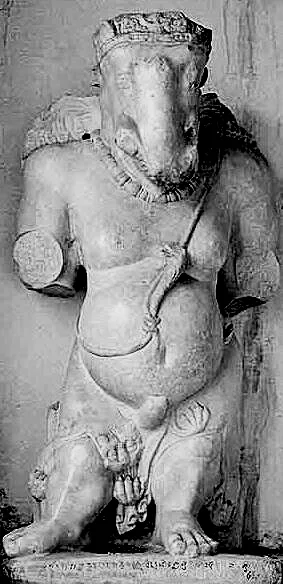
Discovered in 1956 near Kabul, Afghanistan, the Gardez Ganesha is among the most significant archaeological confirmations of his ancient presence in Central Asia: a stone statue bearing both his unmistakable form and a dated royal inscription.
A Statue With a Story in Stone
Carved from marble and depicting an elephant-headed figure with a broken tusk and trunk, standing in a dynamic warrior's pose influenced by Hellenistic artistic traditions, the statue's base carries an inscription recording its consecration by a king named Khingala, describing it as an image of the "Mahavinayaka."
A Dating Still Studied
Scholars have offered differing assessments of the statue's precise age, with some dating it to the sixth or seventh century CE and more recent analysis attributing it to the seventh or eighth century Turk Shahi period, a reminder that even well-documented archaeological finds continue to be refined through ongoing research.
What This Statue Reveals
Whatever its exact date, the Gardez Ganesha stands as clear, physical proof that his worship reached deep into Central Asia many centuries ago, formally consecrated by royal authority in a region far from the heartlands of Hindu tradition.